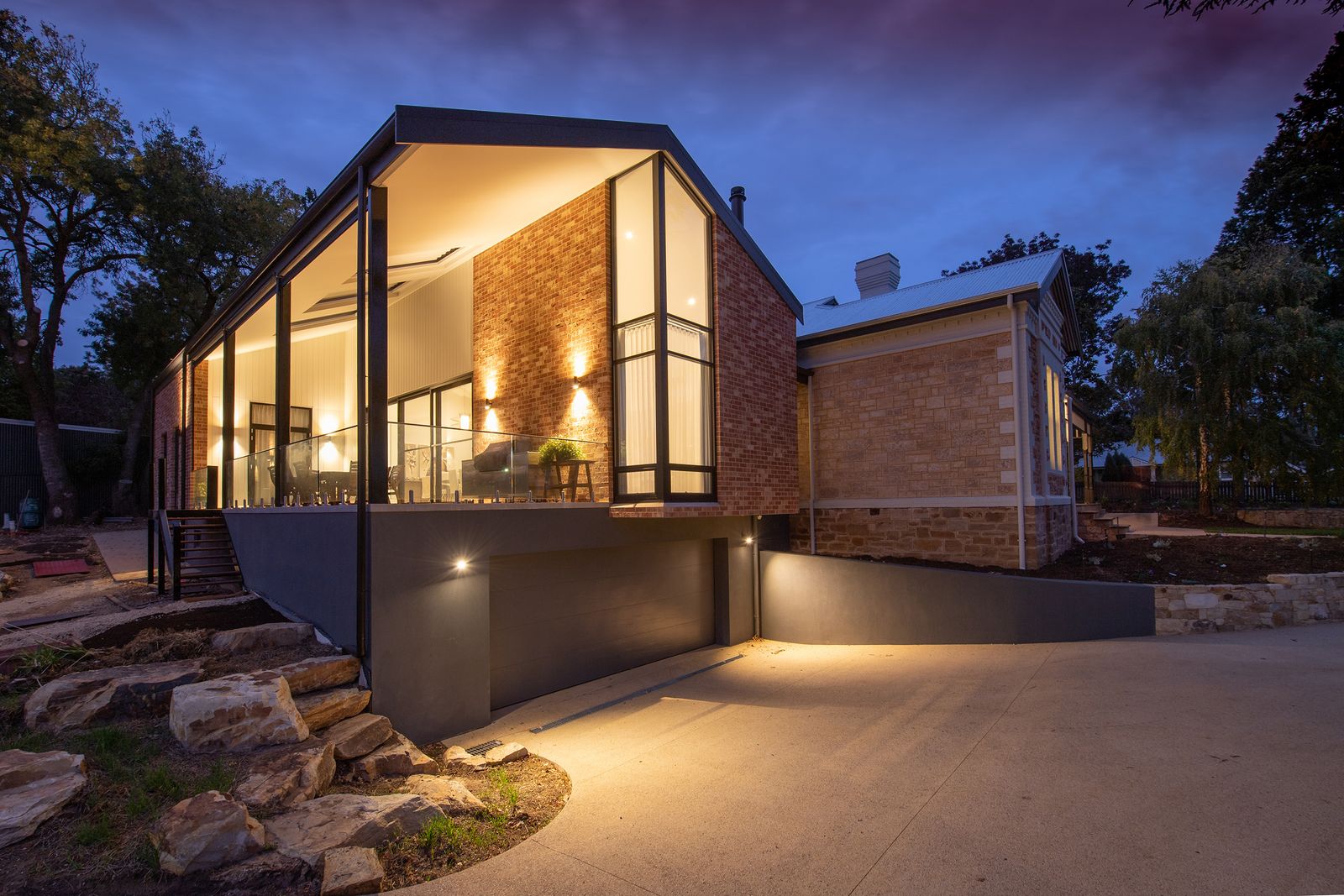
Architectural Lighting in Daytona Beach, FL
If your home needs architectural lighting in Daytona Beach, the difference between glow and glare is design: washing, grazing, and aim angles set at night, on your walls, with you watching.
What Architectural Lighting Does for a Daytona Beach Home
If you are looking into architectural lighting in Daytona Beach, the goal is simple to state and hard to fake: make the house read from the street after dark the way it reads at golden hour. That means light applied deliberately to the structure itself. A complete facade design includes:
- Washing for broad stucco and coquina surfaces, fixtures set back so texture stays soft and even.
- Grazing for surfaces worth dramatizing: stacked stone, shiplap, decorative block, where a tight beam placed close rakes out every shadow line.
- Column and gable accents that trace the architecture's rhythm instead of flattening it.
- Entry emphasis so the front door reads as the destination from the curb.
- Glare discipline: shielded fixtures and aim angles that keep every source hidden from windows, yours and your neighbors'.
Signs Your Facade Is Underperforming After Dark
- The architecture you paid for, arches, columns, deep gables, disappears at sunset.
- One harsh garage floodlight is doing all the work, and doing it badly.
- The house photographs beautifully by day and does not photograph at all by night, which matters when 87 percent of buyers rank exterior lighting essential or desirable in National Association of Home Builders surveys.
- Entry lighting glares at arriving guests instead of guiding them.
- Neighbors with smaller homes have more presence on the street after 7 PM.
What Moves the Price
Facade lighting is priced by fixture count and mounting complexity more than square footage. A single-story ranch might need 6 to 8 wash fixtures; a two-story with columns, multiple gables, and side elevations can take 12 to 18. Soffit-mounted downlights add ladder or lift labor. Installed brass uplights typically run $250 to $400 each in Central Florida, well lights $300 to $450, and most complete facade projects land between $2,500 and $6,500. Every quote is itemized and fixed before work begins.
Built for Coastal Walls and Coastal Weather
Daytona's building stock rewards this service unusually well. Beachside streets carry mid-century block and stucco homes whose texture takes grazing light beautifully, while the newer mainland communities lean smooth stucco and columned entries that want soft washing. Salt air is the design constraint either way: within the aerosol zone we spec brass and 316 stainless housings with IP66 sealing, because coastal suppliers report standard fixtures failing within roughly two years of oceanfront installation. Warm 2700K is the default color temperature; it flatters Florida render and coquina, and avoids the blue cast that reads industrial and attracts insects. Every system rides a surge-protected transformer, non-negotiable in the country's most lightning-active region.
Why Choose Outdoor Lighting Daytona for Facade Work
Aimed at Night, With You There
Wash-and-graze balance cannot be judged in daylight. The demo night sets the composition and the final aiming visit tunes every beam after installation, both with you standing on the curb where the design has to work.
Glare Is Treated as a Defect
Shielded fixtures, controlled beam spreads, and aim angles checked from every window, including the neighbors'. If you can see the source instead of the surface, we have not finished.
Coastal Materials, Documented
Brass or 316 stainless housings, stainless hardware, gel-spliced connections, all itemized in the written plan with the manufacturer warranty terms attached. What goes on your wall is what the paper says.
What Reddit Says About Architectural Lighting in Daytona Beach
When homeowners on r/landscaping talk about lighting the house itself, two themes dominate. The first is what it does: as one commenter put it, good exterior lighting "highlights the home and visually expands the property after dusk," and people share small wins like low-wattage fixtures softly washing dormers with diffusers added to tame the beams. The second theme is restraint. Every facade and uplighting thread draws warnings about glare and light pollution, and the crowd's fixes are consistent: aim light at surfaces instead of into the sky, shield the source, dim more than you think, and put everything on a timer so the display shuts down by 10 or 11 PM. That is close to a design brief for how we work: shielded brass fixtures, warm 2700K, beams set at the night aiming visit so you see lit architecture and your neighbors never see a bulb pointed their way. The threads are a good reminder that the best facade lighting is the kind nobody can trace back to a fixture.
A typical project on the Ormond Beach beachside
The situation: a 1960s concrete-block home two streets off A1A, freshly repainted, with deep eaves and a textured block privacy wall, invisible after dark except for one cold floodlight over the carport.
What gets done: six brass wash fixtures across the front elevation, two grazing fixtures on the block wall to pull its pattern out of the dark, warm entry sconce supplement, and soffit downlights under the eave line, all on a surge-protected transformer with IP66-sealed connections for the salt zone.
The result: the mid-century lines the owners bought the house for are the first thing the street sees at night, the floodlight is retired, and the finish survives the sea air because the metal was chosen for it.
What Clients Say About This Service
They grazed our stone entry wall and it looks carved out of light. Neighbors slow down to look.P. Marchetti Ormond Beach
No glare anywhere. The house glows and we cannot spot a single fixture from the street. That is exactly what we asked for and did not get from the last installer.H. Lindqvist Daytona Beach
The columns and gables finally show up at night. It reads like a different, more expensive house.C. Aldana Port Orange
Reviews shown are representative of typical client feedback.
Frequently Asked Questions
What does facade lighting cost for a typical home?
Installed brass wash and accent fixtures run $250 to $400 each, well lights $300 to $450, and most complete facade projects in the Daytona area land between $2,500 and $6,500 depending on stories, columns, and side elevations. Quotes are itemized and fixed.
What is the difference between washing and grazing?
Distance from the wall. Washing sets fixtures 3 to 5 feet out for soft, even light across smooth surfaces. Grazing places them 6 to 12 inches out so light rakes across texture like stacked stone or decorative block, throwing every shadow line into relief.
Will the lights shine into my windows or my neighbor's?
No. Shielded fixtures and beam control are part of the design, and the night aiming visit checks sight lines from every window before the project is called done.
What color temperature should a Florida home use?
Warm 2700K is the default: it flatters stucco, coquina, and tropical planting, reads intentional rather than industrial, and avoids the blue-heavy light that attracts insects and generates neighbor complaints.
Related Services
Give the Street a Reason to Slow Down
Facade demos happen after dark, right where the design has to work.
Get My Free Lighting Planor call (386) 267-9834