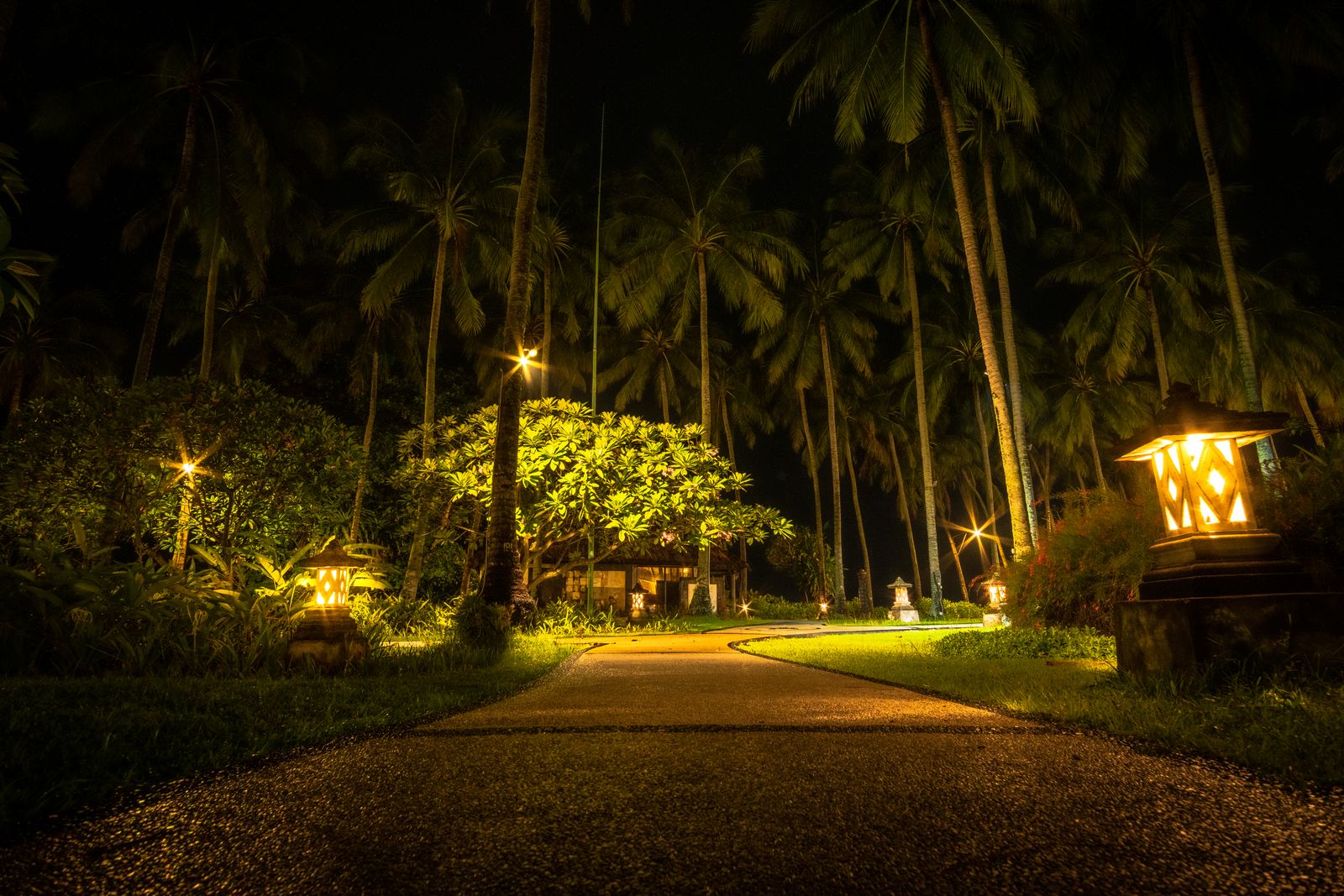
Pathway Lighting in Daytona Beach, FL
If you are adding pathway lighting in Daytona Beach, spacing is the whole craft: warm overlapping pools that guide every step without turning your walk into a runway.
What Good Pathway Lighting Looks Like
If you need pathway lighting in Daytona Beach, the standard to hold every proposal to is overlapping pools of warm light with dark intervals between them. Runway rows of fixtures are the mistake good spacing exists to avoid. A complete walkway design includes:
- Spacing as the craft: fixtures set 8 to 12 feet apart, staggered side to side along curves, so pools of light overlap at walking height.
- Hat-style brass path lights that throw light down onto pavers and bed edges while hiding the source from eye level.
- Step and hardscape lights recessed into risers and seat walls where grade changes create trip points.
- Driveway edge treatment where the approach is long or curved.
- Buried cable with slack loops, so fixtures can shift as plantings mature without a rewire.
Why It Earns Its Place
Path lighting is the safety layer of a lighting design, and the numbers behind it are not decorative: the National Institute on Aging lists poor outdoor lighting among the leading environmental fall hazards for older adults, and falls are the top cause of injury for Americans over 65 per the CDC. On the aesthetic side, a lit walk pulls the whole front composition together, giving uplit trees and a washed facade a ground plane to sit on. It is the least expensive layer of a system and the one guests actually walk through.
Pricing and What Changes It
Installed brass path lights typically run $250 to $380 each in Central Florida, with recessed step and hardscape lights at $200 to $350 depending on whether masonry has to be cut. A front walk usually takes 4 to 7 fixtures; wraparound paths and long driveways more. Most standalone pathway projects land between $1,500 and $3,500, and pathway layers added to a larger system price lower per fixture because trenching and transformer capacity are shared.
Volusia County Specifics
Path lights take more physical abuse than any other fixture: string trimmers, irrigation spray, kids, dogs, and on the beachside, salt air. That is why fixture metal matters most here, brass housings on solid stakes rather than the plastic big-box stems that lean within a season, and why coastal suppliers report standard fixtures failing within about two years near the ocean. Sandy Volusia soil makes leaning worse for cheap stakes and easier for our anchored mounts. In the golf communities off LPGA Boulevard, reclaimed irrigation water chews through bargain finishes; brass shrugs it off. And because summer storms flood bed lines fast, every connection is a waterproof gel splice buried with drainage in mind.
Why Choose Outdoor Lighting Daytona for Walkways
Spacing Proven at Night
The runway effect is invisible on paper and obvious in the dark. The demo night lets you walk the actual spacing before anything is installed, and the aiming visit fine-tunes overlap after.
Fixtures That Stay Vertical
Brass housings on anchored stakes, rated IP65 or better, with 40,000-hour LED modules. The leaning, dimming path light row is the failure we replace most often, and anchored brass is how we avoid ever installing one.
Priced as a Layer or a Project
Walkway lighting stands alone or folds into a full design with shared trenching and transformer capacity. Either way the quote is itemized, fixed, and honored.
What Reddit Says About Pathway Lighting in Daytona Beach
Path lighting threads on r/landscaping are blunt about the two classic mistakes. The first is spacing: one commenter told a homeowner "right now you have built an airport runway leading straight to your driveway," and the crowd consensus is to stagger fixtures so softer pools of light pull a person down the walk instead of framing it in matched pairs. The second is solar. In thread after thread, people who tried solar path lights in anything short of full sun report the same arc: dim output, dying batteries, and giving up, with the standing advice that "if you want consistency, reliability, and good light, you definitely want low voltage." The practical question people tell each other to ask is simple: plan the design first, then price solar against wired before committing. Our approach matches what those threads keep learning the hard way: staggered brass fixtures on buried low-voltage cable, spacing you approve at the demo night, and no batteries to die in the shade of a Volusia oak.
A common call from Port Orange
The situation: a corner lot near Spruce Creek Road with a curved paver walk, a grade step nobody remembers until they miss it, and a solar light set that quit glowing usefully around Halloween.
What gets done: six brass path lights staggered along the curve at 10-foot intervals, two recessed lights set into the step risers, and the run tied into a small surge-protected transformer with room to add the back patio next year.
The result: guests find the door without a phone flashlight, the step announces itself, and the fixtures stand straight through mow days and summer downpours instead of tilting into the mulch.
What Clients Say About This Service
The spacing is perfect, soft pools of light the whole way down. My mother visits weekly and I stopped worrying about the front step.L. Prendergast Port Orange
Two years of trimmer hits and the brass hats have not budged or dimmed.G. Yamada South Daytona
They lit the walk and the step first at the demo, and that sold the rest of the yard.B. Considine Ormond Beach
Reviews shown are representative of typical client feedback.
Frequently Asked Questions
How many path lights does a front walk need?
Most front walks take 4 to 7 fixtures spaced 8 to 12 feet apart and staggered along curves. More than that usually creates the runway effect good design avoids.
What do path lights cost installed?
Brass path lights run $250 to $380 installed in Central Florida, recessed step and hardscape lights $200 to $350. Standalone walkway projects typically land between $1,500 and $3,500.
Why not just use solar path lights?
Solar stakes dim through their first year, lean in sandy soil, and rarely survive a Florida summer. Low-voltage brass fixtures on buried cable deliver consistent output for decades and carry real warranties.
Can path lighting help prevent falls?
Yes. The National Institute on Aging lists poor outdoor lighting among the leading environmental fall hazards, and the CDC ranks falls the top injury cause for adults over 65. Lighting grade changes and walking surfaces is the fix.
Light the Way Home
Walk your own path lit at the free demo night before anything is installed.
Get My Free Lighting Planor call (386) 267-9834